

STOP
Screen-time damage
Before it starts
A simple, science-backed way to use your phone without triggering curiosity, tantrums, or early screen dependency.
Free shipping over $100 · 30-day returns
Sound familiar?
Your phone isn't the problem - but it can create one.
The moment your child sees your screen, the battle begins. Grabbing, screaming, guilt, over and over, every single day. Research shows children under 4 are neurologically wired to fixate on screens - the movement and light trigger the same dopamine response as addictive behaviour. So it's not about discipline. It's biology. And the longer the pattern continues, the harder it becomes to break.
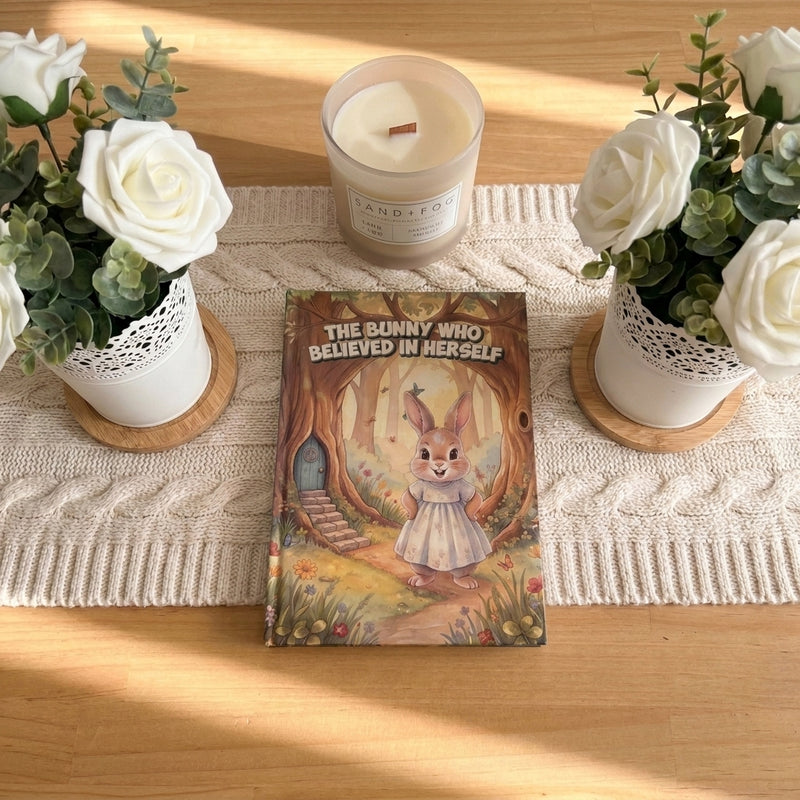
The NookBook was designed to solve exactly this. A beautifully crafted phone cover that looks just like a children's book, hiding your screen in plain sight. No screen visible means no reaction, no grabbing, and no guilt. Just calm, uninterrupted moments for you, and a healthier relationship with technology for your child.
Backed by research
Early screen exposure matters more than you think.
The science is clear. What children are exposed to in their first years shapes the brain they will carry for life. Here is what the research actually says.
Screen time recommended by the WHO for children under 2 years old. None. Zero.
Higher risk of language delay in toddlers exposed to screens for more than 1 hour daily (Cheng et al., JAMA Pediatrics, 2020)
Key developmental areas impacted by early screen exposure: language, attention, and emotional self-regulation
Screens rewire the developing brain
A baby's brain is not a small adult brain. It is actively forming millions of neural connections every single day, and the inputs it receives during this window shape those connections permanently. Fast-moving images, flashing colours, and the unpredictable stimulation of a screen trigger the same dopamine reward pathways linked to addictive behaviour in adults. For a brain that has not yet developed impulse control or emotional regulation, this creates a craving loop that is genuinely difficult to interrupt. The American Academy of Pediatrics warns that this overstimulation can displace the slower, richer experiences like play, conversation, and exploration that the brain actually needs most at this age.
Language development slows
Children learn language through conversation, not consumption. Every back-and-forth exchange with a caregiver, every repeated word, every shared moment of pointing at something and naming it, builds the neural architecture for speech and communication. Research published in JAMA Pediatrics found that for every hour of background TV exposure, children heard around 770 fewer words from adults and produced 230 fewer of their own. Over days and weeks, that deficit compounds. Toddlers exposed to high levels of screen time consistently showed smaller vocabularies and slower sentence development than their peers.
Attention spans shrink
Screens demand nothing from a child. Content shifts every few seconds, delivering constant novelty without requiring focus, patience, or persistence. Over time, the brain adapts to expect this pace and finds slower, quieter activities like books, puzzles, or imaginative play far less stimulating. The NIH's landmark ABCD Study, which followed over 4,500 children, found that those watching more than two hours of screens daily scored measurably lower on tests of thinking, language, and problem-solving. Crucially, these differences were visible as early as age 3, well before children start school.
Sleep is disrupted
Sleep is not downtime for a young child. It is when the brain consolidates memories, processes new learning, and carries out the majority of its physical growth. Screens interfere with this at two levels. First, the blue light they emit suppresses melatonin production in children far more aggressively than in adults, delaying the onset of sleep and reducing its depth. Second, stimulating content keeps the nervous system in a heightened state long after the screen is switched off. A study published in BMJ Open found a direct link between screen use and later bedtimes, shorter sleep duration, and poorer sleep quality in children under five, all of which have downstream effects on mood, behaviour, and development the following day.
References: WHO Guidelines on Physical Activity, Sedentary Behaviour and Sleep for Children Under 5 (2019); Cheng et al., JAMA Pediatrics (2020); American Academy of Pediatrics Policy Statement on Media and Young Minds (2016); Zimmerman et al., JAMA Pediatrics (2009); ABCD Study, National Institutes of Health (2018); Hysing et al., BMJ Open (2015).


Hide the trigger. Change the behaviour.
What if your phone simply didn’t look like a phone?
Young children are naturally drawn to things they recognise. And once they spot your phone, it can be hard to convince them that it’s not for them.
That’s where The NookBook comes in.
NookBook conceals your phone inside a beautifully designed hardcover book, so from the outside, it simply looks like you’re reading.
- No glowing screen.
- No familiar phone shape.
- No instant curiosity.
- No need to keep saying, “This isn’t for you.”
Hide the phone. Keep the connection.
The NookBook is designed to remove the visual trigger before the battle starts.
When your phone disappears into a book, your child sees something familiar and ordinary instead. You can answer a message, check an email or quickly scroll when you need to, without putting a bright, recognisable screen right in front of them.
It’s not about creating a completely screen-free home. It’s about making the everyday moments a little easier.
"Out of sight, out of mind - it actually works."
Simple by Design
Three steps to a calmer day
Slide your phone in
Open the NookBook and place your phone into the snug, custom-fitted holder. It takes seconds and works with most modern smartphones.
Use it just like normal
Check messages, scroll your feed, reply to that text. Go about your day as usual. From the outside, you are simply reading a book.
Watch them ignore it completely
No screen visible means no trigger. No grabbing, no meltdown, no guilt. Just calm, uninterrupted moments for both of you.
Why NookBook
What's your biggest challenge right now?
Select the one that sounds most like your day.
The fix
Use your phone freely — without a single battle.
Because they never see a screen. Slid inside a beautiful hardcover children's book, NookBook disguises your phone completely. Curious little eyes see a storybook and move on instantly. No grabbing. No screaming. No guilt.
— works from day one, no rules to enforce
The fix
Screen exposure naturally reduced — no effort required.
Out of sight, out of mind. When your child cannot see a screen, they simply stop asking for one. No negotiations. No tech rules to explain to a toddler. Just effortless, natural reduction built into how you use your phone.
— parents report children stop asking within days
The fix
No trigger, no tantrum. It really is that simple.
Meltdowns happen because children see a screen and want it — or see it disappear and lose it. Remove the trigger entirely and you remove the reaction. NookBook means they never knew the screen was there in the first place.
— no more dreading putting your phone away
The fix
Calm, confident and guilt-free — every single time.
Mum guilt is real. But it shouldn't come with checking a message or replying to an email. NookBook gives you your phone back — privately, quietly, without your child ever knowing. Use it as often as you need. No shame in that.
— because you deserve to use your phone in peace
The fix
Fully present in every moment, finally.
The reason you're not fully present isn't your phone — it's the mental energy you spend managing your child's reaction to your phone. Eliminate that, and you're actually there. That's what NookBook gives back.
— the most common thing parents tell us

You've got this
START
Feel more in control - without the guilt.
Join parents who've already discovered a calmer, more confident way to use their phone around their children.
Free shipping over $100 · 30-day returns · Secure checkout